ABOUT us
Need to speak to a VoIP expert?
Leave your contact information and we will be in touch shortly!
We voice enable your applications!
Voice Quality is as much a science as it is an art; it is not a one design fits all solution. Adaptive Digital fine tunes the quality and clarity of your speech communication application.
We Provide:
SYSTEM DESIGN AND DEVELOPMENT
Algorithm customization/porting | Integration and testing
ALGORITHM DEVELOPMENT
Optimization on newest platforms ahead of market demands
GROUND UP SOFTWARE SOLUTIONS
Leveraging our existing and emerging technologies
VOICE DATA ANALYSIS
Improve customer enclosure and design
BRIEF OVERVIEW
Voice Quality is as much a science as it is an art; it is not a one design fits all solution. Adaptive Digital’s state-of-the-art voice enhancement algorithms/solutions, flexible configuration options, and real-world experience enabling exceptional voice call performance across each users’ environment.
Adaptive Digital’s products include High Definition acoustic echo cancellation (HD AEC™), HD stereo acoustic echo cancellation, Packet, line and Network Echo Cancellation, Voice Engine with SIP, high-density Conference engines, speech compression, telephony, and voice-quality algorithms across many platforms.
Adaptive Digital is a member of the Texas Instruments’ Design Network, and ARM Community.
Brian M. McCarthy, Founder and President of Adaptive Digital, is the originator of the product line of voice compression, echo cancellation and telephony signaling.
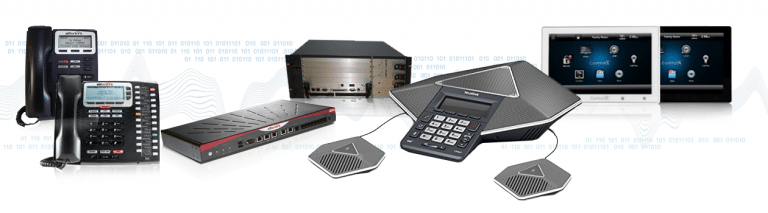
Core Competencies
IDENTIFY AND UNDERSTAND CLIENT NEEDS | CUSTOMER SUPPORT FROM CONCEPT THROUGH DEPLOYMENT
Adaptive Digital maintains leadership in the voice quality enhancement market by continually adapting to new communications technologies.
We bring 30+ years’ experience and a complete library of telephony and compression algorithms, including: Best-in-class Echo Cancellation, and High Definition Acoustic Echo cancellation, unparalleled in quality.
Our focus on product optimization and development gives us a competitive leading edge and differentiates us in the marketplace. Our product and service offerings draw from extensive industry experience.
We offer the best support in the industry. We support customers from concept through deployment, helping to ensure that our products’ voice quality is carried into the end user experience.
We bring with us a repeat customer base. Our customer’s option’s for their next gen products will be expanded to include your devices.
We bring voice to the discussion table, we add value to your product.
History
ADAPTIVE DIGITAL TECHNOLOGIES, INCORPORATED 1994
Founded in 1994, the mission of Adaptive Digital was to develop efficient high quality voice compression and telephony software for DSP based systems. Originally Adaptive Digital started developing INternational MARitime SATellite (INMARSAT) telephony software on Texas Instruments™ (TI) floating point processors.
Immediately following the success of that project, Adaptive Digital quickly began porting other voice compression software to fixed point TI TMS320C54x™ DSP along with echo cancellation and tone detection and began integrating these software blocks into a single solution. In 1995 as a result of success with this approach, Adaptive Digital became a registered TI third party member and began porting their software to all TI TMS320C5000™, and ‘C6000™ DSP platforms. As a parallel effort, Adaptive Digital utilized several resources behind the development of their carrier class network echo-canceller. Development efforts focused on highly efficient complex and robust implementation. In 2002 Adaptive Digital Technologies’ G.168 Echo Canceller was validated as Carrier-grade at AT&T’s Voice Quality Assessment Laboratory in Middletown, New Jersey
2002 Adaptive Digital’s G.PAK framework was born. G.PAK, a scalable/configurable voice-over-packet DSP software solution, turns a DSP into an easily controlled voice-over-packet engine, was created to run on the Texas Instruments TMS320C5400 family of Digital Signal Processors.
In 2003, Adaptive Digital developed DSP ‘Chip’ Solutions, based upon G.PAK technology, a collection of DSP algorithms and Texas Instruments hardware components, which together handle signal-processing tasks for specific end equipment. In 2005 Adaptive Digital had ported it’s robust G.PAK to TI’s C55x DSPs and developed over sixty DSP software products and solutions. By 2006, G.PAK was ported to TI’s TMS320C64x family of Digital Signal Processors (DSPs).
In 2008 G.168 Plus™, a packet Echo Canceller for Voice over Internet Protocol (VoIP) Applications was developed . The G.168 Plus packet echo canceller has the unparalleled ability to handle round-trip delays of up to 512 milliseconds well beyond the ITU standard of 128 msecs. This ability to cancel echoes with exceptionally long delays, coupled with a built-in awareness and handling of packet-loss made Adaptive Digital’s G.168 Plus uniquely suitable for VoIP applications.
2009 began the porting to ARM® processors, and development of VoIP Engine™; VoIP engine is at the core of our ARM-based VoIP applications, it provides complete PCM to packet processing. VoIP Engine is a pure data processing engine. With the development of VoIP Engine came our platform based SDKs; AnVoice™ (for Android), and iPVoice™ (for iOS), and most recently LnxVoice™ (for Linux) was added to the voice engine family.
2010 was our first Multi-core porting of G.PAK on the Texas Instruments C6472 DSP.
In the years 2012, and 2013 Adaptive Digital saw the biggest leap in VoIP technology. Adaptive Digital delved into new markets (Automated Home Control, Medical) with voice solutions such as IP Intercom. We continued the porting of individual algorithms to the ARM Cortex-A series of applications processors, and expanded the base software set available in our VoIP Engine product line.
2013 Adaptive Digital began working closely with Yealink to develop a conference phone that rivals that of Polycom. In doing so, our acoustic echo cancellation (AEC) was required to meet the highest of standards in all echoic conference situations. Today we call that product HD AEC.
2014 - 2018, 2019 - 2024 and Beyond
HIGH DEFINITION VOICE QUALITY SOFTWARE
Adaptive Digital’s HD AEC™ is a High Definition (HD), Multi-Mic Capable, Full-Duplex Acoustic Echo Canceller (AEC) which includes noise reduction (NR), as well as anti-howling, adaptive filtering, nonlinear processing, and double-talk detection. It operates in narrowband, (NB), wideband (WB), super-wideband (SWB) and full band (FB) frequency ranges.
Acoustic echo cancellation is an art as much as it is a science; it is not a one design fits all solution. Each echoic situation is unique; the solution usually must be fine-tuned for a specific target application. Adaptive Digital has extensive experience in the algorithm development, implementation, optimization and configuration tuning.
Adaptive Digital’s HD AEC product provides superior voice clarity and true full duplex performance under a wide set of challenging acoustic environments. It is capable of eliminating the acoustic echo in difficult conditions such as unbalanced speech levels, close speaker to mic proximity, background noise, indoor/outdoor environments, reflective room surface, double talk, and echo path changes.
Our current roadmap: We are currently optimizing our HD AEC for newer platforms such as ARM’s ARMv9 architecture.
Adaptive Digital’s RoIP Software Engine enables users to extend their radio connectivity beyond their local network to any device and to anywhere across the globe.
Adaptive Digital’s voice over IP intercom software leverages voice quality algorithms.
The IP notification voice communication includes HD Acoustic Echo cancellation (HD AEC), which incorporates a noise reduction feature, as well as anti-howling, nonlinear processing, and double-talk detection.
Radio over IP can be deployed over private networks as well as the public Internet.
Adaptive Digital’s algorithms run on STMicro – STM32 series of MCUs, SPEAr1310 device, Imagination Technologies’ MIPS® Processor – MIPS32® – 24 KEc®, Analog Devices SHARC, and Freescale iMX processors.
Quality of Service
ADAPTIVE DIGITAL TECHNOLOGIES, INC. 1994
Distinguish ourselves by unrivalled customer satisfaction
Conduct our business honestly, ethically and with the highest degree of professionalism
Look at all emerging opportunities with enthusiasm and positive attitude
Exceed customer expectations
Maintain long term relationships with clients
Our Product
OUR PRODUCT AND SERVICE OFFERINGS DRAW FROM EXTENSIVE INDUSTRY EXPERIENCE.
Adaptive Digital provides off the shelf algorithms, and customized high-quality voice software solutions including: High Definition Full-band Multi-Mic Acoustic Echo cancellation, and Best-in-class Echo Cancellation. Solutions include IP Intercom, IP Phone, and Multi-Mic Conference Engine with both Narrowband and wideband support. Our solutions ensure a consistent and clear communications experience for all call types, and our focus on product optimization and development gives us a competitive leading edge and differentiates us in the marketplace. We support customers from concept through deployment, helping to ensure that our products’ voice quality is carried into the end user experience.
Adaptive Digital’s highly optimized algorithms are offered as linkable object libraries with “C” callable functions or as turnkey DSP solutions. Our algorithms process calls every minute of every day in wireless, VoIP, traditional telephony, server, gateway, military, medical and Conferencing applications.
Adaptive Digital’s solutions support a low-cost product development model with short time-to-market. Our extensive knowledge of digital voice processing is proven by our outstanding reputation and repeat customer base.
Adaptive Digital is a member of Texas Instruments’ Third Party Developer Network, ARM’s Connected Community, and ARM’s Solution Center for Android (SCA).
Your Product Guarantee
OUR PRODUCT AND SERVICE OFFERINGS DRAW FROM EXTENSIVE INDUSTRY EXPERIENCE.
All Adaptive Digital standard ITU, ETSi, and GSM products come with a compliancy guarantee, to assure product performance on your application platform/device. Your Adaptive Digital custom products come with a pre-defined performance guarantee which assures your satisfaction in your products performance. Adaptive Digital can seal this level of assurance through integration and testing services which provide documented results of the product’s operability and performance.